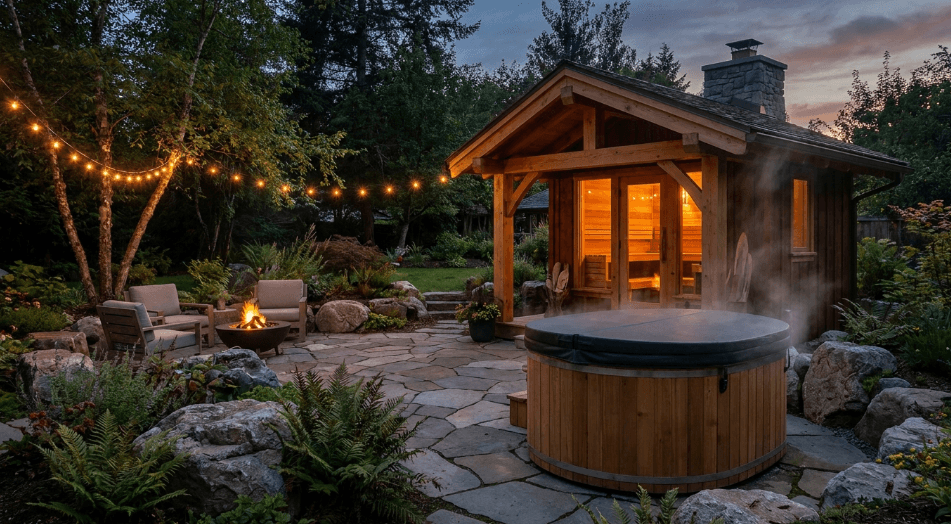
A compact home sauna, whether a plug-in infrared cabin or a two-person barrel unit, generally needs between 12 and 35 square feet of floor space, a 120V or 240V circuit depending on the heater, and a few inches of clearance around the heater itself. Most first-time buyers can have a compact unit delivered and running within a weekend once the electrical side is sorted. The two decisions that matter most are footprint, meaning how many people realistically need to fit at once, and heat type, meaning infrared panels versus a traditional stove, and getting those two right early avoids a return or an awkward rebuild later.
How Much Floor Space Does a Compact Sauna Really Need?
Square footage on a spec sheet rarely tells the whole story. A one-person infrared cabin can be as small as 3 feet by 4 feet, which sounds tiny until the door swing and a few inches of side clearance for airflow around the panels get added in. A two-person barrel sauna has a curved profile, so its footprint reads larger on paper than the usable interior suggests, often 6 to 7 feet long including the end caps. Ceiling height is the number beginners skip most often. Most compact units need 6.5 to 7 feet of clear height, which rules out plenty of basement corners and low garage rafters before the heater question even comes up. Measure the actual room, including the swing path of the door, not just the wall a buyer had in mind.
Infrared or Traditional Heat: Which Suits a Tight Room?
For a first small sauna, infrared cabins tend to be the simpler starting point. Most run on a standard 120V household outlet, reach a usable temperature in ten to fifteen minutes, and generate less ambient heat in the surrounding room, which matters if the unit is going into a finished basement or a spare bedroom. Traditional electric heaters run hotter, typically 150 to 195 degrees Fahrenheit, and deliver the sharper, drier heat that longtime sauna users tend to prefer, but most models above 6 kilowatts need a dedicated 240V circuit, which usually means scheduling an electrician before installation day. Neither option is wrong for a small footprint. The choice comes down to whether a buyer wants the faster, lower-draw setup or the more traditional session, and whether the electrical work fits the budget and timeline.
What Electrical Work Should You Budget For?
A plug-in infrared cabin is usually the lowest-friction option because it uses an existing 120V outlet, so there is often no electrical work at all beyond confirming the circuit is not already loaded down with other appliances. A traditional heater in the 6 to 9 kilowatt range almost always needs a new 240V circuit run from the panel, and depending on the distance and whether the panel has open capacity, that job can range from a straightforward afternoon to a more involved run through finished walls. It is worth getting a rough quote from a local electrician before finalizing a heater choice, since the installation cost can meaningfully change which unit actually makes financial sense for a small space.
What Does a Small Sauna Cost to Buy and Run?
Entry-level infrared cabins for one or two people start in the low thousands of dollars, while a well-built two or three person cedar cabin or barrel sauna with an electric heater generally lands in the mid to upper thousands once delivery and any electrical work are included. Running cost is modest either way. An infrared panel unit typically pulls under 1.5 kilowatts, so a 30-minute session costs roughly what a hair dryer costs to run for the same stretch. A traditional heater draws more, often 4.5 to 6 kilowatts for a small cabin, so frequent users notice it more on the power bill, though still not dramatically. When it is time to compare current models by footprint and heater output side by side, SweatDecks’ lineup breaks units down by size, which is the fastest way to rule out anything too large for a measured room.
Where Can a Small Sauna Actually Fit in Your Home?
Garages are the most forgiving spot for either heat type, assuming a circuit is nearby and, for a traditional heater, there is enough ventilation to keep the surrounding space from overheating. Finished basements suit infrared cabins particularly well because they run cooler in the room and skip most ventilation planning. Apartment balconies are more limited: weight restrictions and building rules usually rule out anything with a stone-filled traditional heater, but a lightweight infrared cabin sometimes works if the balcony structure and building management both allow it. Any outdoor placement needs a level, well-drained surface underneath, since standing water under a wood cabin shortens its life regardless of species.
What Should a First-Time Buyer Check Before Ordering?
Start with three numbers: the room’s floor dimensions, its ceiling height, and what electrical capacity already exists nearby. Compare those against the manufacturer’s stated footprint and clearance requirements, not just the headline square footage in the listing title. Check the heater warranty specifically, since a short or vaguely worded heater warranty is one of the more reliable signs of a lower-quality import unit, even when the wood cabinet looks fine. Finally, confirm delivery logistics for a pre-built cabin sauna, since it needs a doorway or stairwell wide enough to get it into the room, while a panel kit that assembles on site sidesteps that problem entirely.
Frequently Asked Questions
How much floor space does a small sauna need? A one or two person infrared cabin fits into roughly 12 to 20 square feet, while a compact two person barrel sauna needs about 25 to 35 square feet once the curved footprint and door swing are counted. Ceiling height matters too, since most compact units need at least 6.5 feet of clearance.
Is infrared or traditional heat easier for a first small sauna? Infrared cabins are usually the simpler first purchase for a tight room because most run on a standard 120V household outlet and reach a usable temperature in ten to fifteen minutes. Traditional electric heaters run hotter and often need a dedicated 240V circuit, which adds an electrician visit before installation.
Does a small sauna need a permit? A plug-in infrared cabin on an existing 120V outlet usually does not trigger a permit. Adding a new 240V circuit for a traditional heater typically does, so it is worth checking with a local electrician before ordering.
Can a small sauna go on an apartment balcony or in a garage? A garage works well for either heat type as long as a circuit is nearby and, for traditional heaters, there is enough ventilation. A balcony is usually limited to lightweight infrared cabins because of weight rules and building restrictions.
What is the biggest mistake first-time small-space buyers make? Measuring only the footprint and forgetting clearance. Most heaters need several inches of open air on each side plus room for the door to swing fully open, and skipping that check is the most common reason a unit does not fit as planned.
References
- Cardiovascular and Other Health Benefits of Sauna Bathing: A Review of the Evidence, Mayo Clinic Proceedings, 2018
- Clinical Effects of Regular Dry Sauna Bathing: A Systematic Review, Evidence-Based Complementary and Alternative Medicine, 2018
- Benefits and risks of sauna bathing, The American Journal of Medicine, 2001
- Saunas and your health, Harvard Health Publishing
- By Nathan Pierce